Design · 2021
Immigration-Planning MVP
Helping Brazilians relocate abroad. Led UX at a legal-tech startup, from research to an investor-ready MVP in 12 weeks.
Context
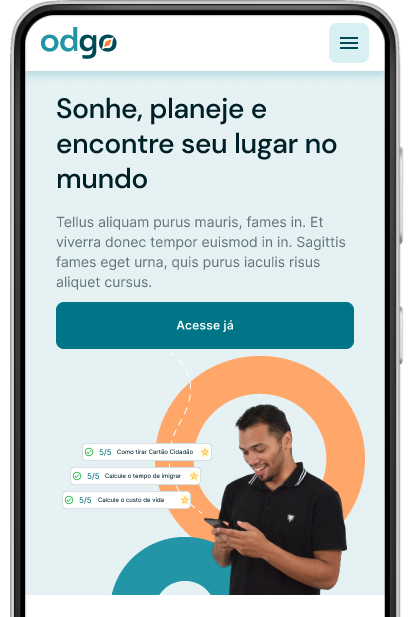
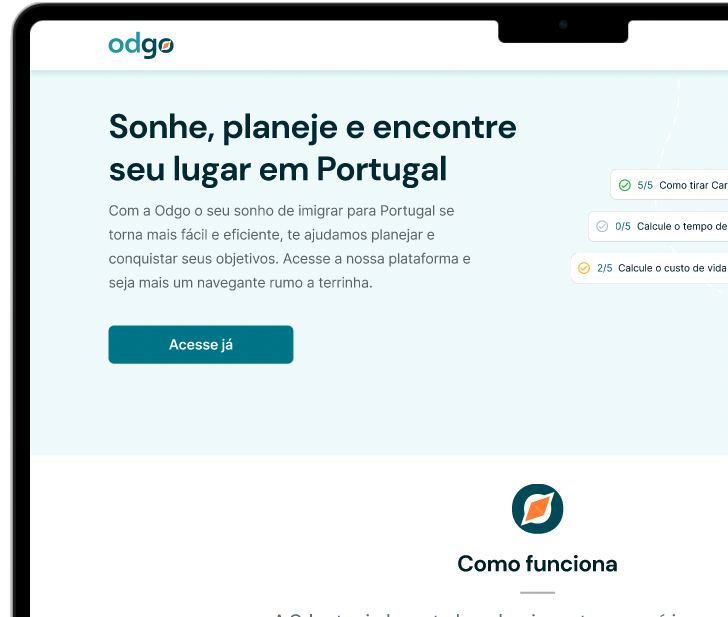
The product is a free online platform that helps Brazilians plan their immigration to Portugal from anywhere in the world.
How does it work?
You sign up on the platform and take a quick quiz to discover your user profile — e.g., immigrating with family, skilled worker, student, etc. The planner then provides all the information you need to help you reach your goal.
Product vision (CEO)
“Be like Airbnb, but for immigration.” In the CEO’s vision, the app had to be as disruptive as Airbnb — giving everyone the possibility of immigrating from wherever they are to any country they want to live in.
Racing against the clock. In 12 weeks we needed to launch our beta and validate the MVP with real people. Meanwhile, we had to tailor the product to our audience, running continuous tests and pivoting when necessary.
Demo for investors. To be presented to new investors, the MVP needed to run with real data and real people, with the parent startup funding a limited window (3 to 6 months).
My role
As Senior UX Lead, I was responsible for the UX/Research team throughout the discovery, development, and launch of the product, which would enable the company to raise investment to accelerate the startup.
The UX team had a total of 4 people (1 UX Lead, 3 designers) and worked in parallel with the Product Development team (5 people: 3 developers, 1 Product Owner, 1 designer). The UX/Research team was later merged into the Product Development team. On top of that, the CEO worked full time providing direction during the product launch stage so that the MVP would meet the expectations required to secure investment.
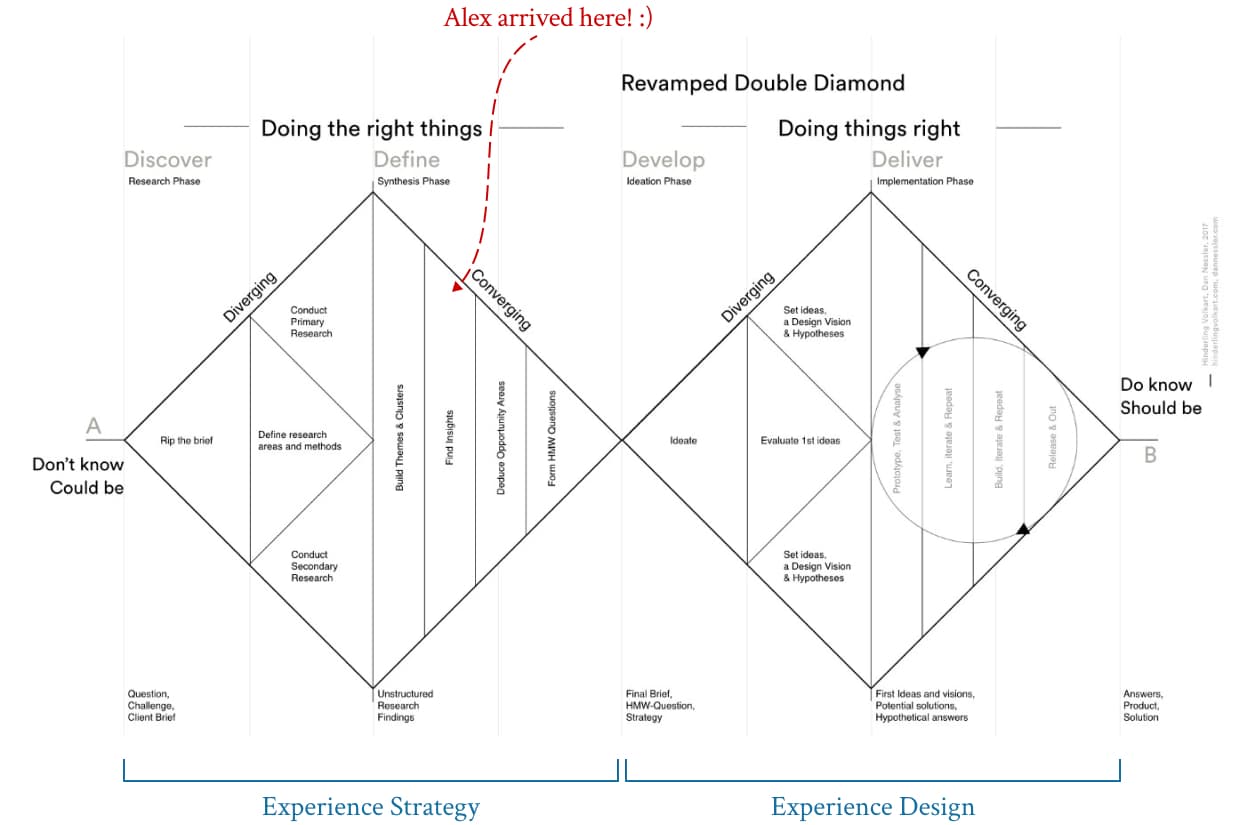
By the time I joined, the UX/Research team had already completed the research phase. So, using the revamped Double Diamond model as a foundation, we moved on to connecting the research data with the design ideas (Design Synthesis), organizing the empirical data and shaping a concise problem statement.
Process
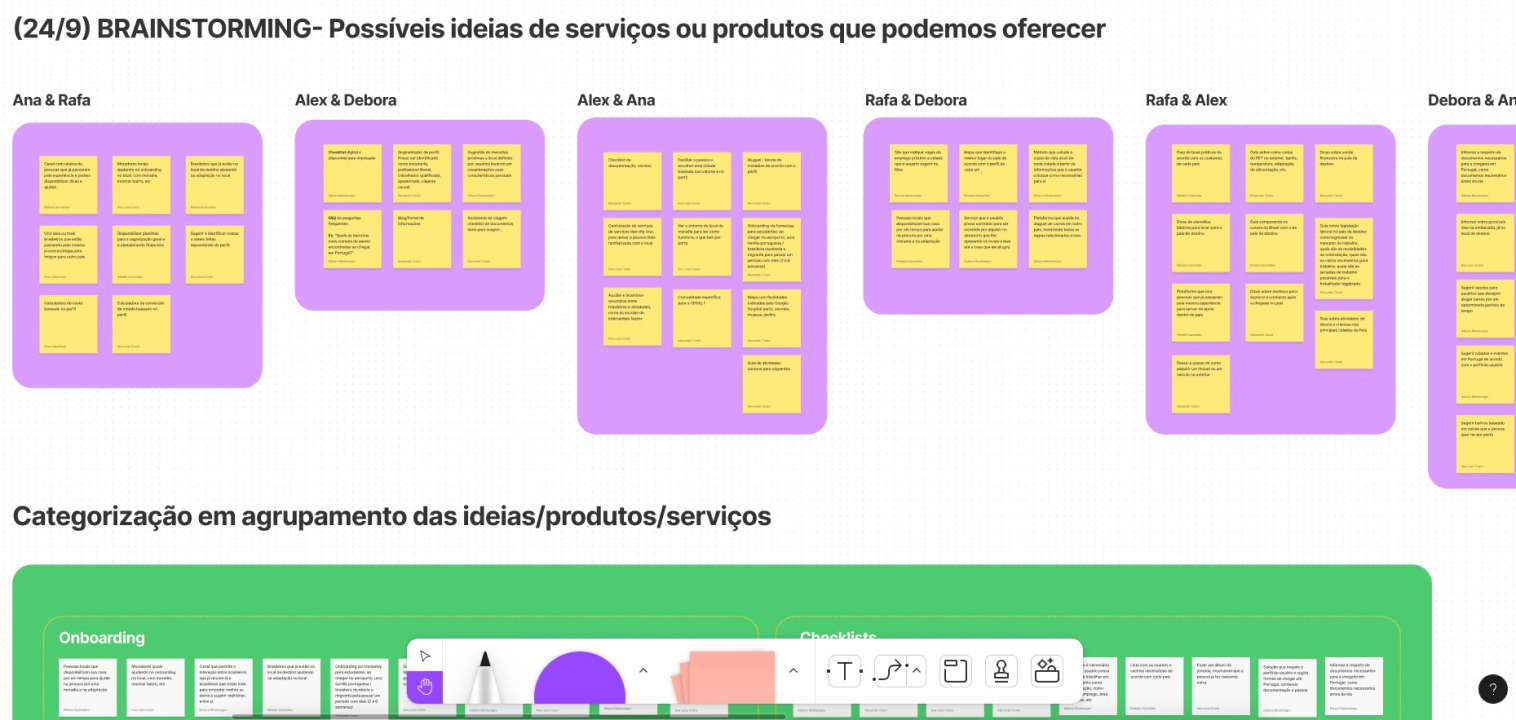
As a key activity, we ran an ideation and brainstorming session where we structured data, gathered new ideas, and finally presented the potential product and service solutions to the CEO, who centralized the entire approval and decision-making process.
Process
Next, we moved into the ideation stage, working collaboratively in short bursts each day (the equivalent of Agile pair programming).
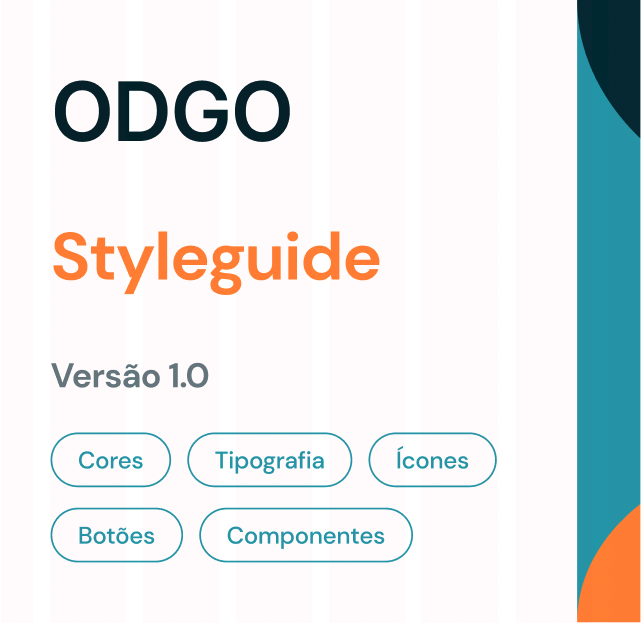
We built the first wireframes and microinteraction simulations, created a mood board to help explore new ideas and connections with the potential target audience, and worked through the development of the brand and the style guide that would support the product’s visual identity.
Process
During this process, we discovered that the team could move straight from the low-fidelity prototype to the high-fidelity prototype thanks to the components created in the style guide.
This sped up the handoff of prototypes to the development team and gave us a time advantage — UX team, 1-week sprints vs. development team, 2-week sprints — which we converted into weekly workshops to raise the quality of the deliverables.
Outcome
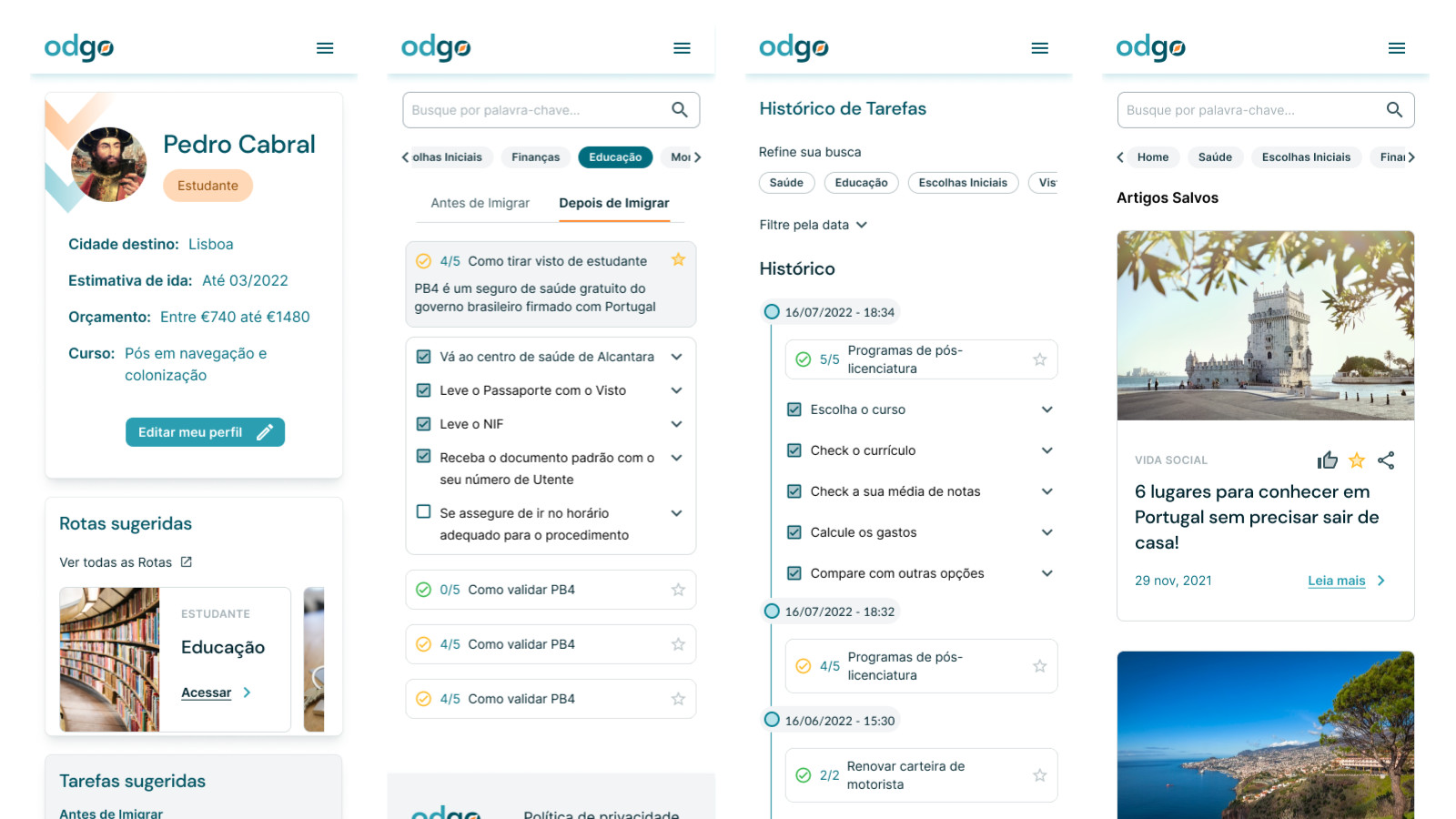
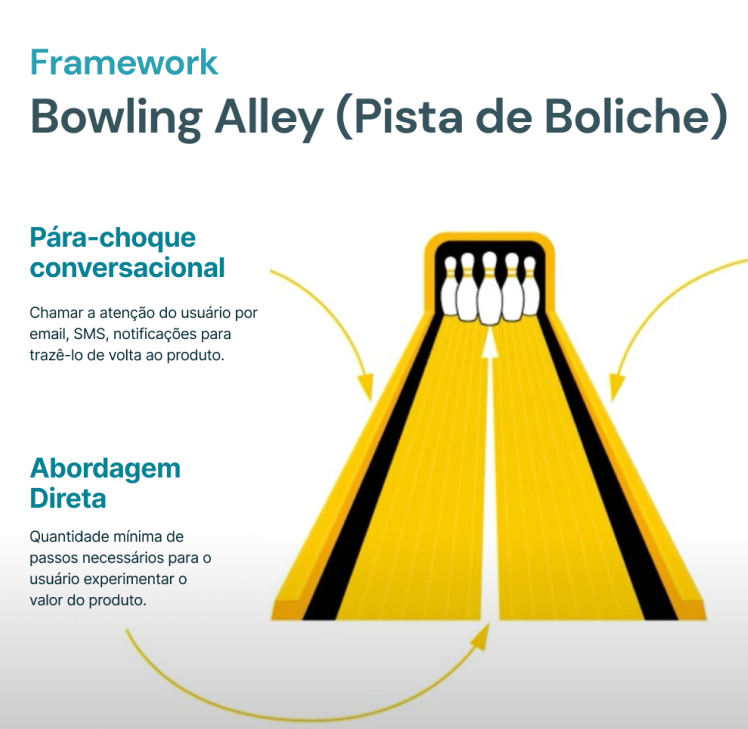
To make the MVP easier to build and to get it approved by the CEO, we split the product into 4 distinct parts: Login, User Profile Definition (Form), Task Group, and Knowledge Base. After testing and monitoring user navigation through Hotjar, we made improvements to the user experience.
After 12 weeks (Sep/21 to Dec/21), we launched the first version as an MVP — built to keep evolving on the insights gathered from research and testing, prioritized by the value perceived by users and the value added to the product.