
Published anyway.
Still looks intentional.
via OPTEN AG · Feb — Mar 2026
Manufacturer CMS Platform.
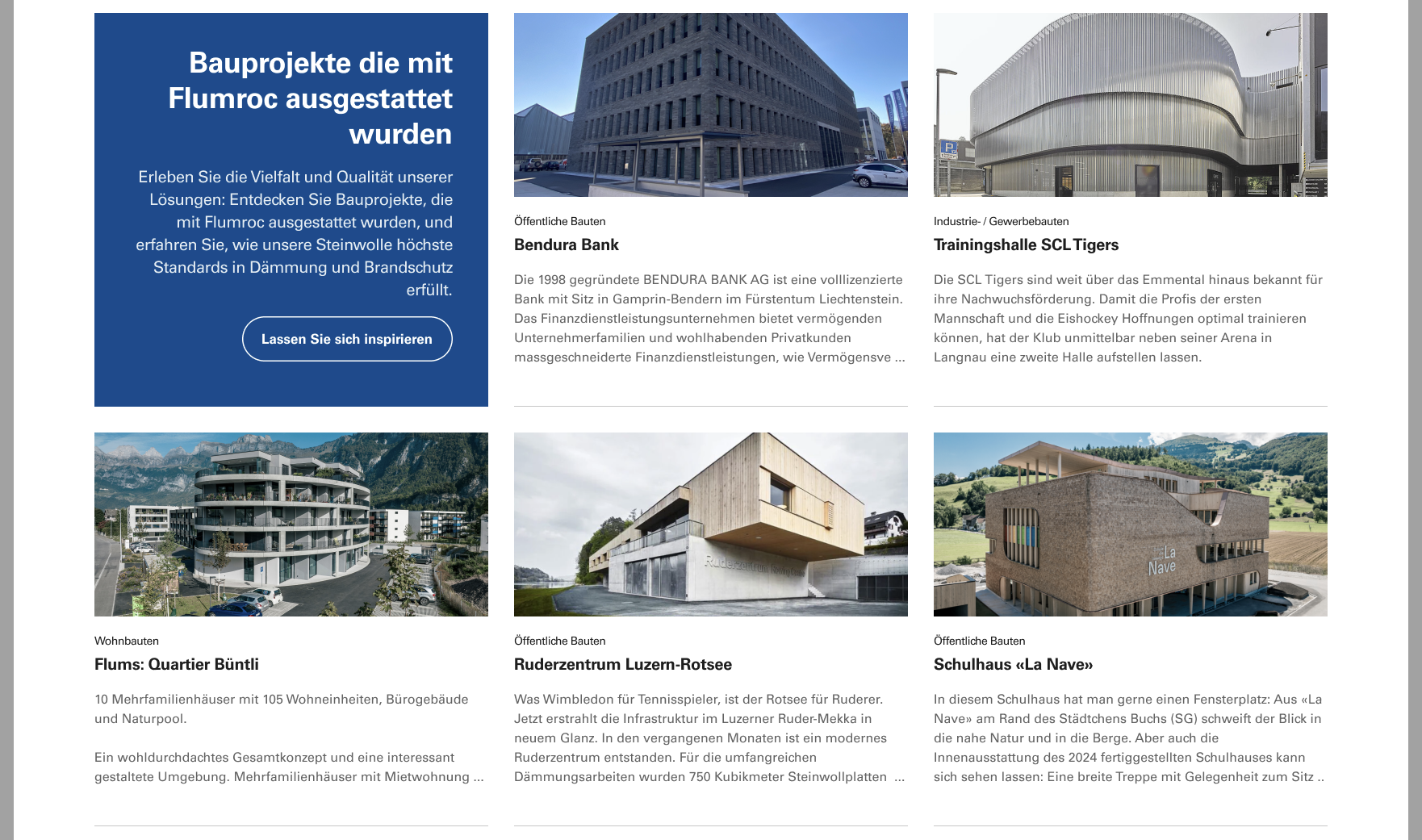
CMS modules for a building-materials manufacturer: grid and carousel layouts sharing one base partial, content fallbacks so half-filled modules still render cleanly, promotional variants with deferred video embeds — and responsive page previews so editors see every breakpoint before publishing.
The real user is an editor
A CMS module is not finished when it renders the designed content. It is finished when a marketing editor, in a hurry, fills half the fields and publishes anyway — and the page still looks intentional. For a building-materials manufacturer with a large catalogue and a small content team, that scenario is the normal case, not the edge case.
One base partial, three variants
Grid, carousel and promotional layouts share a single base partial, so spacing, typography and responsive behaviour are defined once. Content fallbacks live in that base: a missing image collapses to a layout that still balances, absent text shortens the module instead of leaving a hole. The promotional variant defers its video embed until interaction, so a marketing module never costs the page its load time.
Drag the diagram sideways to read it
Seeing it before publishing
Editors got responsive page previews — every breakpoint visible before anything goes live. It removes the publish-then-check-on-your-phone loop, and with it most of the layout tickets that loop generates.
Built with BlockListBuilder
Umbraco 17 with Razor, composed through BlockListBuilder so modules stay editor-assemblable rather than developer-assembled. The measure of success is negative: no support request that starts with “the page broke when I left the field empty”.
Editors can’t break a layout by leaving a field empty — fallbacks live at the component level.