
Own product · 2026
PromptNinja.
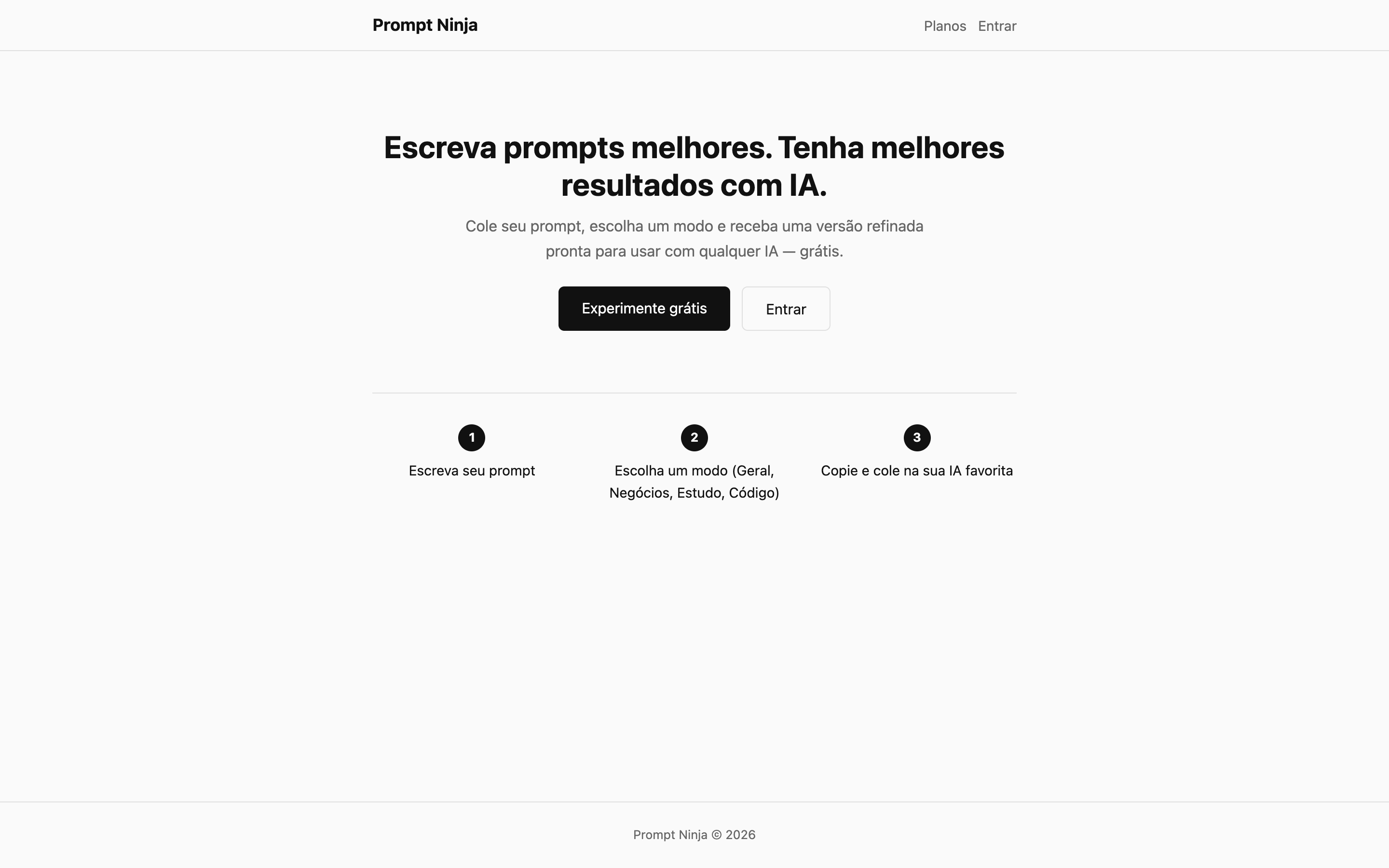
A SaaS that turns a rough idea into a structured, reusable prompt for the major AI assistants. One input, four lenses. Designed, built, billed and shipped solo on Cloudflare Workers — the infrastructure runs on Cloudflare’s free tier, so the model is the whole cost line.
People know what they want. They can’t say it to a machine
The gap isn’t ideas — it’s structure. Someone has a business, a topic to learn, a script to write, and types two lines into ChatGPT and gets two lines back. PromptNinja takes the two lines and returns the prompt they should have written: context, constraints, output format, follow-up prompts — the thinking made explicit, ready to paste into the assistant you already use.
One input, four ways of thinking
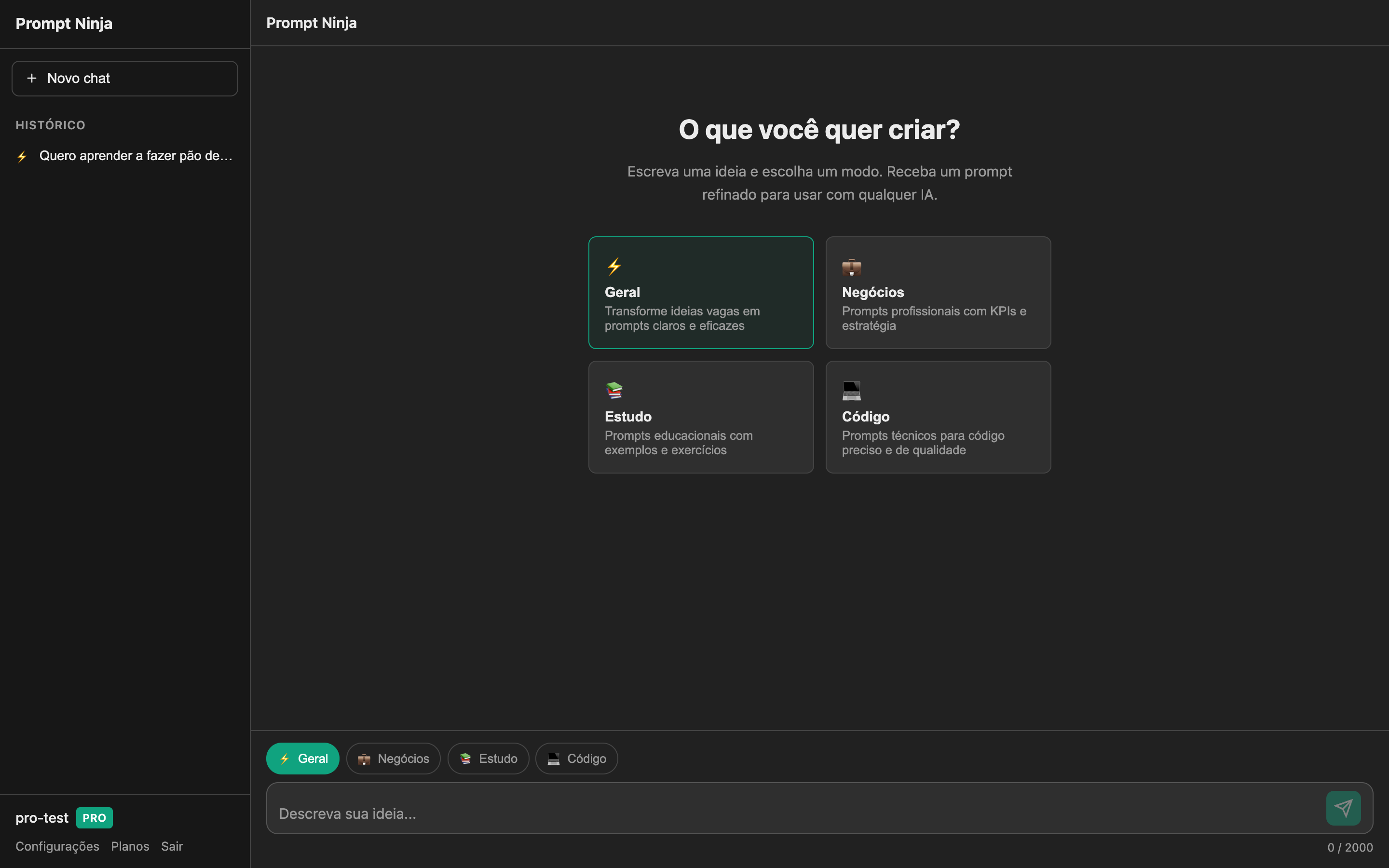
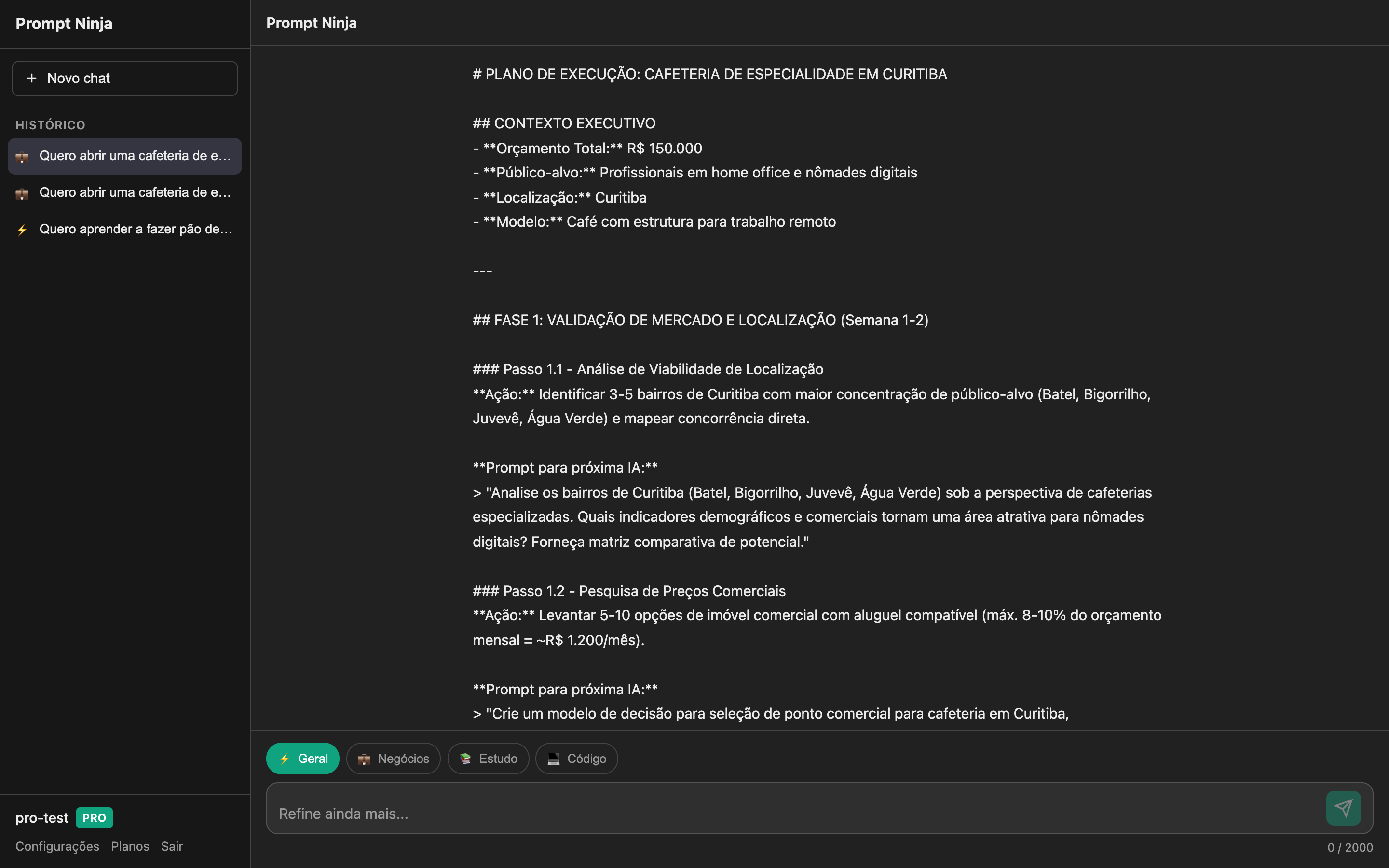
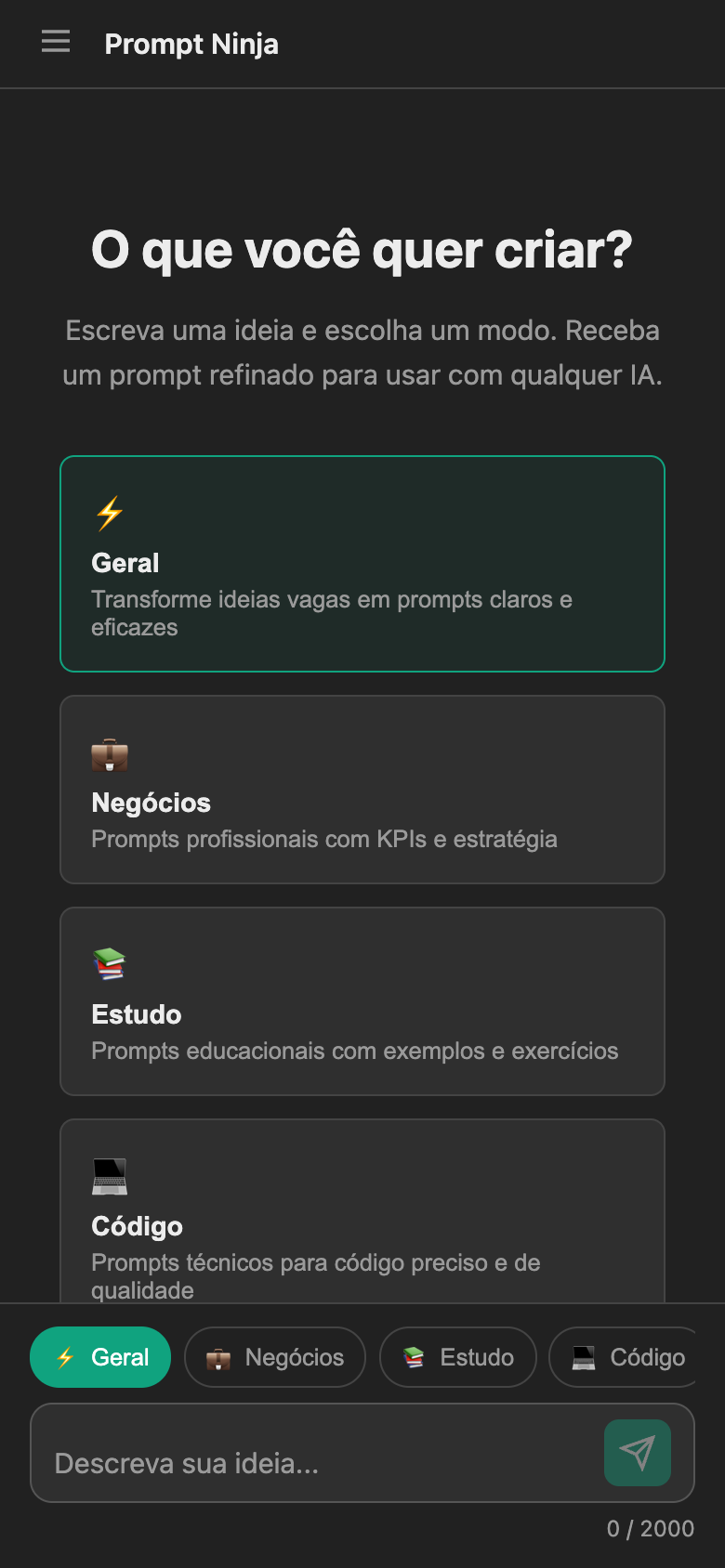
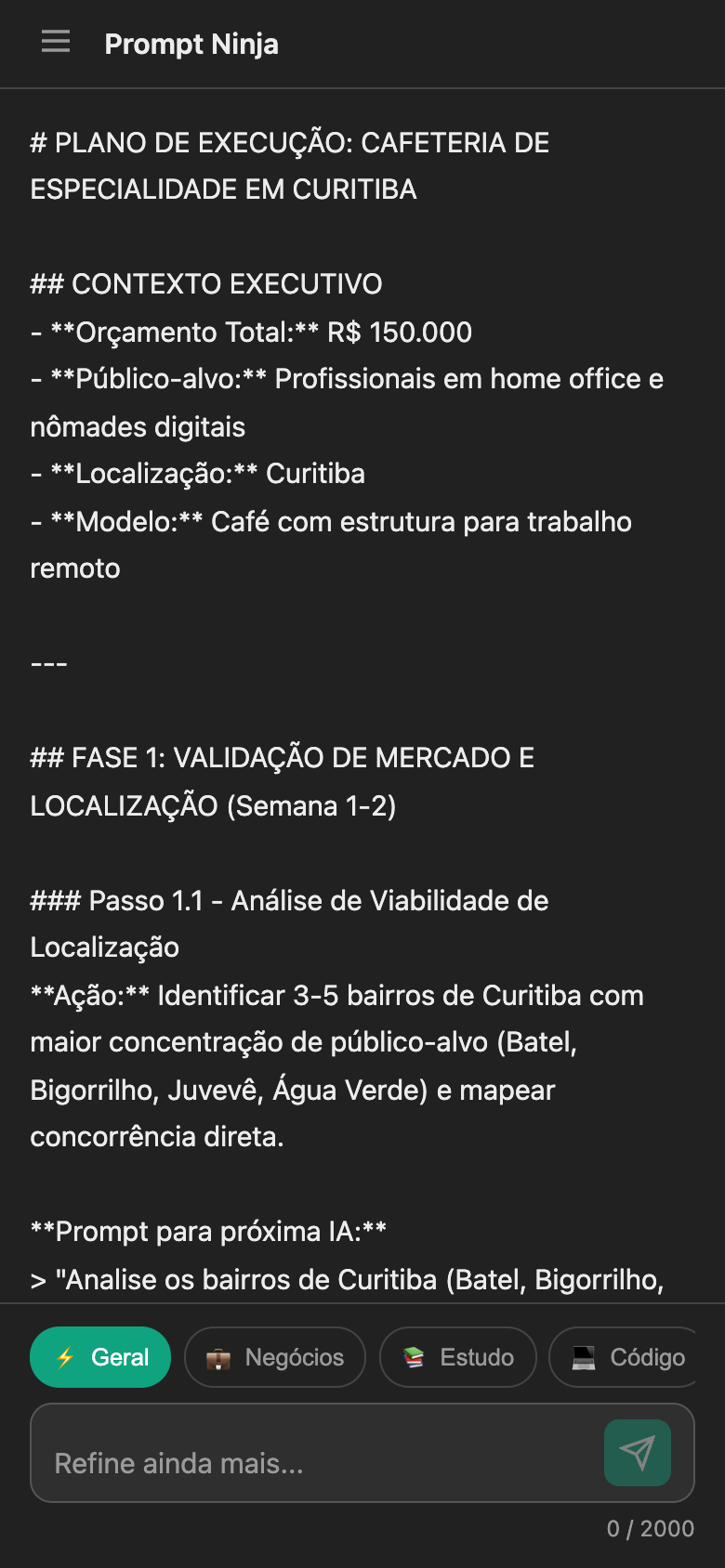
The only control is a mode: General, Business, Study, Code. It doesn’t change where the output goes — it changes how the model thinks about the input. The same café idea becomes a phased plan with KPIs in Business, a progressive curriculum in Study, a spec with edge cases in Code. Tested by pasting the output into four different assistants; the decomposition holds.
Temperature is a product decision
The system prompts matter less than the room the model gets. At temperature 0.7 and 1,500 tokens every mode collapsed into the same flat bullet list; at 1.0 and 4,000 it decomposes. That number is protected in the codebase like a schema. The interface stays out of the way: no modals, no spinners under two seconds, results appear when ready.
The model is the cost line
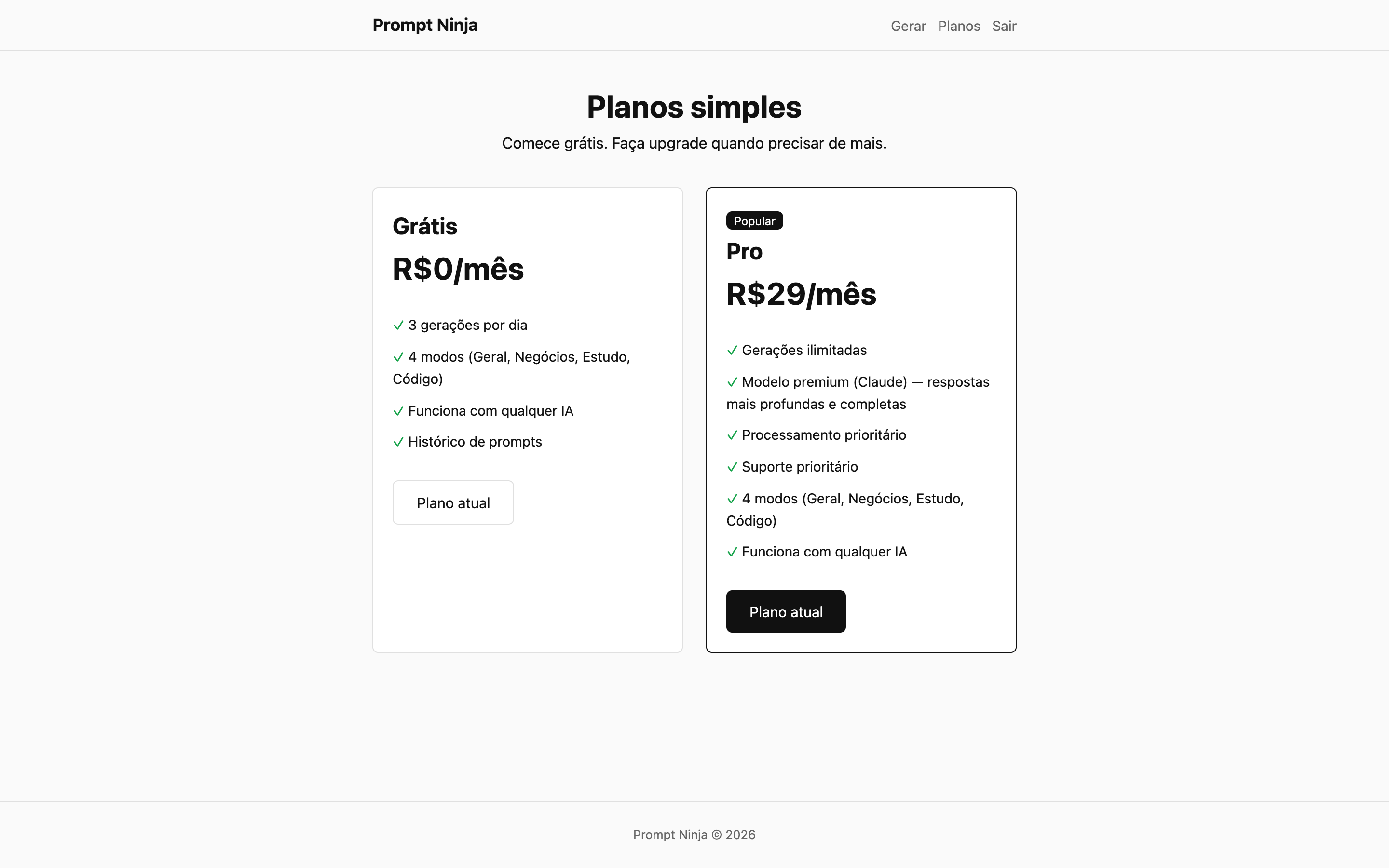
Every generation is logged with tokens, cost and latency. I ran the same café input through five models side by side and read the outputs, not the benchmarks: the free tier runs on Gemini Flash-Lite at a fraction of a cent, Pro on Claude Haiku because it writes two to four times deeper in Business mode. Daily caps are sized from the measured cost, not guessed.
Rewritten three times, on purpose
A PHP prototype validated the modes. A Next.js version validated Stripe and the flow, then met Vercel’s pricing. A Python rewrite on Oracle’s free tier ran until the instance vanished. The product lives on Cloudflare Workers with Hono and D1: one production dependency, a global edge, no servers, deploy in one command. Magic-link login, encrypted history, Stripe subscriptions, rate limiting — all the same hands, designed to run without them.
Live at promptninja.com.br. Free-tier infrastructure; every AI call logged with its cost.