Petrobras · 2012 — 2014
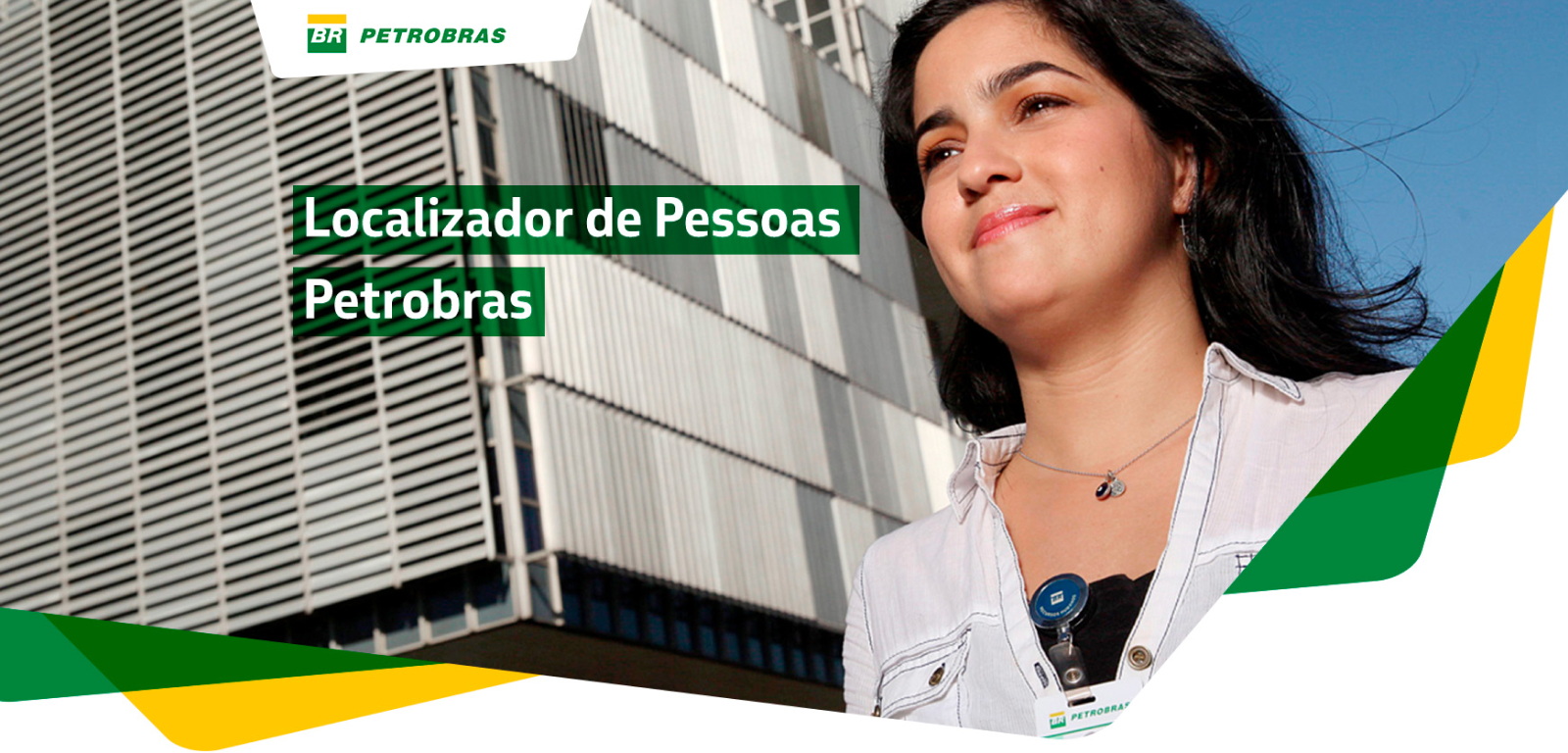
LOPE · Unified People Finder.
The LOPE challenge: help locate any employee of the Petrobras workforce as fast as possible, typing up to 3 terms in the search.
Petrobras People Finder
Available in 3 languages, and the first fully accessible application at Petrobras, the People Finder meets the W3C, WAI/ARIA and WCAG compatibility requirements. It was even tested by fully visually impaired users.
Running for approximately 2 years, from 2012 to 2014, LOPE had a total of 16 multidisciplinary professionals working across multiple teams.
A note about the NDA
This project was under NDA until October 2022 — 10 years — so it was not possible to collect all the material needed to demonstrate the entire UX process. Photos, videos, prints of user interviews, screenshots, records of the group dynamics: none of it was allowed by Petrobras — not even as personal records.
All the material collected and shown here was saved through successive backups and, in my opinion, this case is well worth demonstrating.
What were the three main objectives of LOPE?
Objective 1: Technology and Design.
Replace all the people-finding tools and systems at Petrobras around the world with a single light, simple and intuitive application.
Objective 2: Behaviour and Finance.
Cut in half the time it takes visiting employees to access company premises. The most effective locating tool available allowed a person to take about 4 minutes between arriving at reception and being authorised to enter Petrobras premises.
Objective 3: Technology and Cybersecurity.
Unify and normalise all the data about employees around the world securely — it is sensitive data — and be the single trusted source of that information (Single Source of Truth) with the maximum performance available.
What did I do on the project (in short)?
I was the designer responsible for the UX, UI, Prototyping and UX Strategy of the application.
The Process!
The first step was to define the strategy for creating this new people-finding tool. How long would users need to feel completely comfortable, outside their comfort zone, using a new unified tool adopted by the whole company? Something of this proportion, at this scale, never seen before in the history of the company, would need a fallback in case things did not work out in the first implementation.
In the wake of that question, others just as challenging appeared:
- What innovative aspects should be considered and adopted by this new solution?
- How to make this merger of tools viable, in a tangle of data that had not yet been unified and normalised?
- Is this new tool in line with the way Petrobras sees the world?
- Would LOPE be aligned with new technologies and sit within the company’s business strategy? (Future-proof)
- Is there any data that helps prove this new product will really be financially viable?
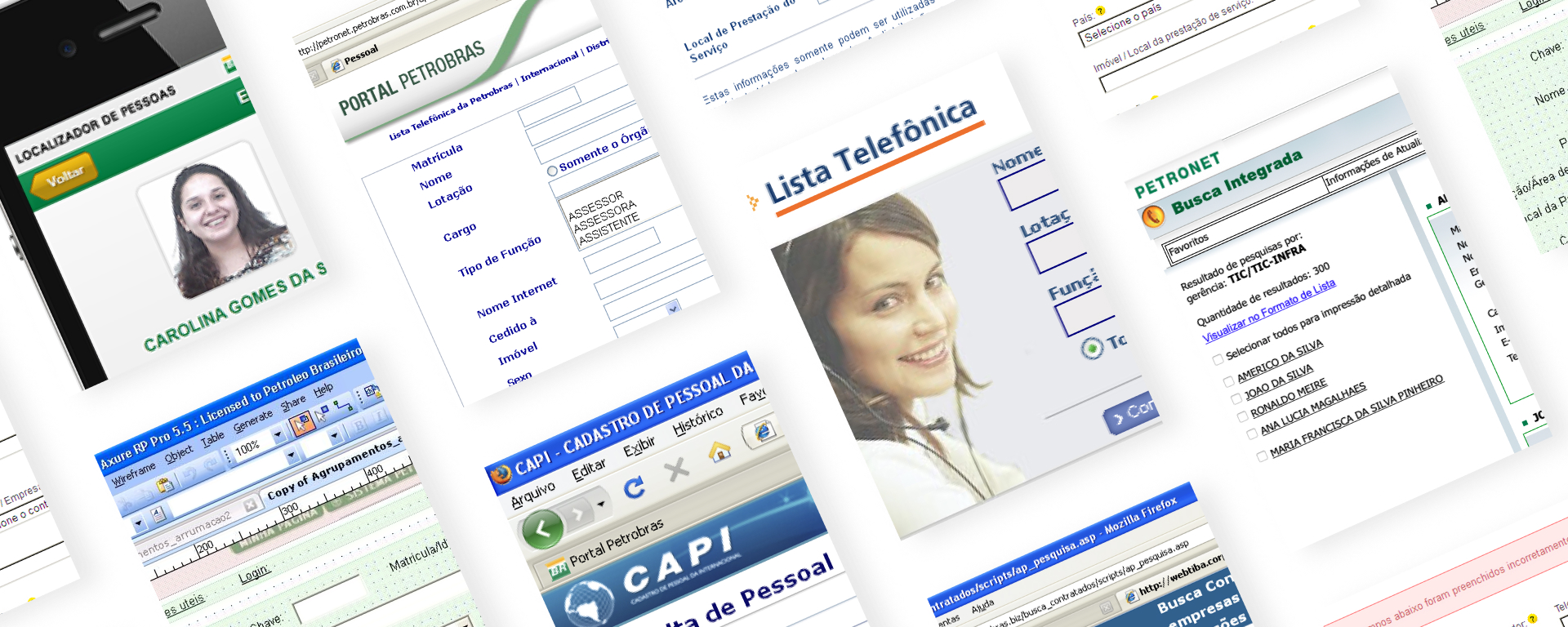
Benchmarking
The business strategy revolved around that statement. Because of it, multiple teams with specialists in every kind of technology were consulted about the possible technology stacks for this application. Once the technology challenges were understood, the search for the value innovation of this new product began: would what we delivered be simple and easy to use? What was the simplest digital product in the world, used by the largest number of people for most of the day? Was that product compatible with the solutions Petrobras already had in place?
And so I began the stage of mapping and benchmarking every people-finding application that existed inside Petrobras, comparing them with the main search engines on the market at that moment — Google, Bing, Yahoo, DuckDuckGo — to understand the strengths, weaknesses and implementation opportunities, and the main threats of each model.
If you work at Petrobras, any employee must be able to locate you with the least possible effort, as fast as possible, in the best possible way, with excellence and simplicity.
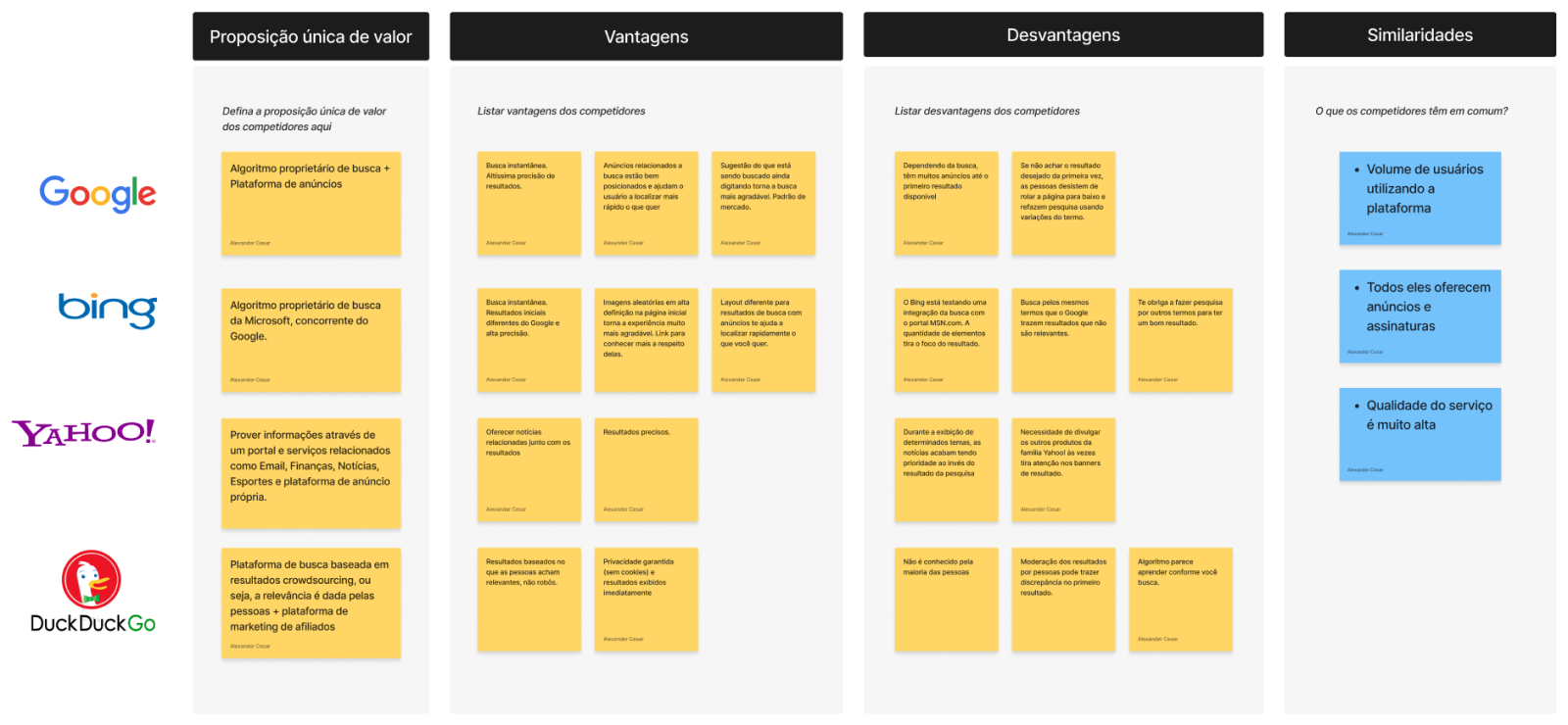
The groups identified as using one or more people-finding tools
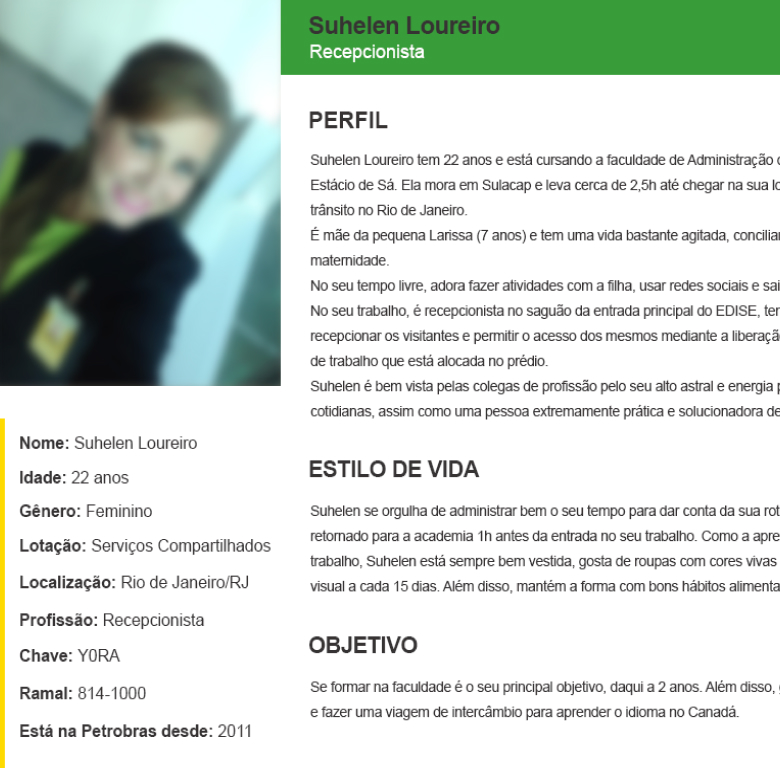
Next, we surveyed the profiles of employees who accessed people-finding tools around the world, so we could choose representatives for those groups and invite them to take part in a research and testing process throughout the construction of the tool.
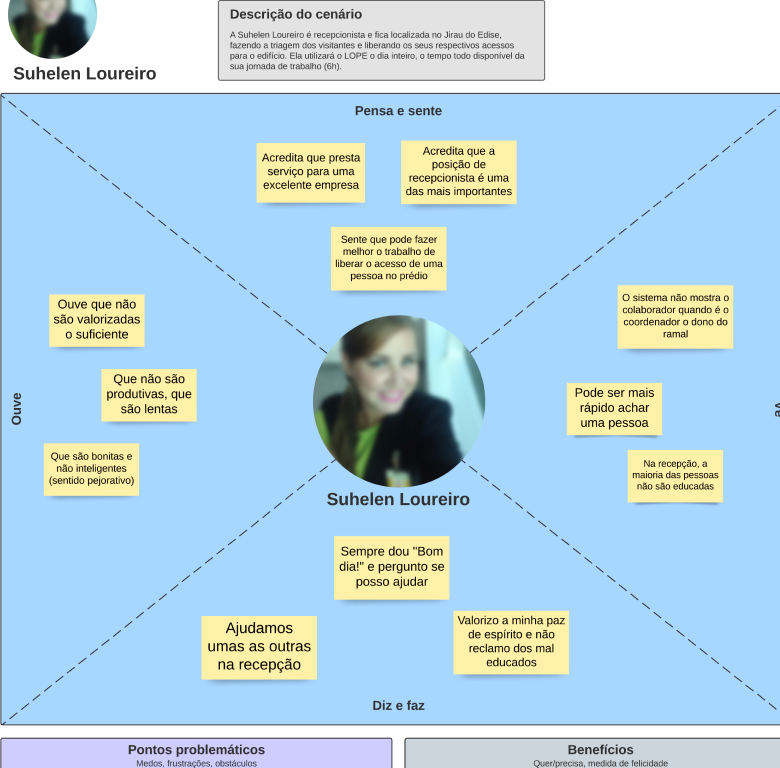
With that, it was possible to trace user profiles and their journeys through the existing locators — to understand their needs, their usage preferences and their pains in the daily contact with the tools.
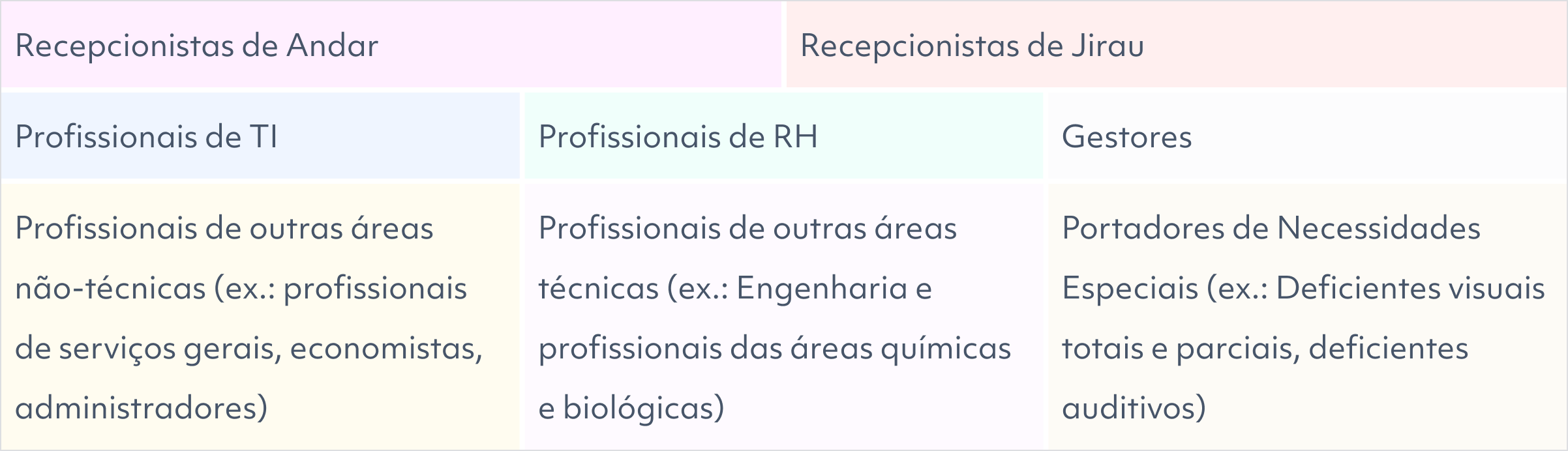
- Floor Receptionists
- Use multiple people-finding tools. They are not limited to their own department or floor. They locate people inside their own building and, in some cases, contact receptionists at other locations and/or send emails or direct messages to multiple people.
- Jirau Receptionists
- Use multiple people-finding tools. They locate people inside their own building to request entry permission for visitors and workforce employees.
- IT professionals
- Very familiar with sites and apps, and able to instruct other employees through a task step by step when someone needs help with something they have already tried.
- HR professionals
- Familiar with locating employees of the Petrobras workforce and of other companies.
- Managers
- Usually have assistants to help locate people, and the group of people they contact is known in advance — so the tool ends up being used more for consultation, or to extract data for reports.
- Professionals from other non-technical areas (e.g. general services, economists, administrators)
- Familiar with the most popular sites and apps, and able to say with some precision and knowledge what they like most when using those sites and apps, and what they would like to be better.
- Professionals from other technical areas (e.g. engineering and the chemical and biological fields)
- Familiar with the most popular sites and apps, and able to say with some precision and knowledge what they like most when using those sites and apps, and what they would like to be better.
- People with special needs (e.g. fully and partially visually impaired, hearing impaired)
- Use people-finding tools the same way other employees do. Because they have special equipment with specific software supporting their daily lives, they have a high degree of understanding of technology — and can locate people even when the application is not accessible to them.
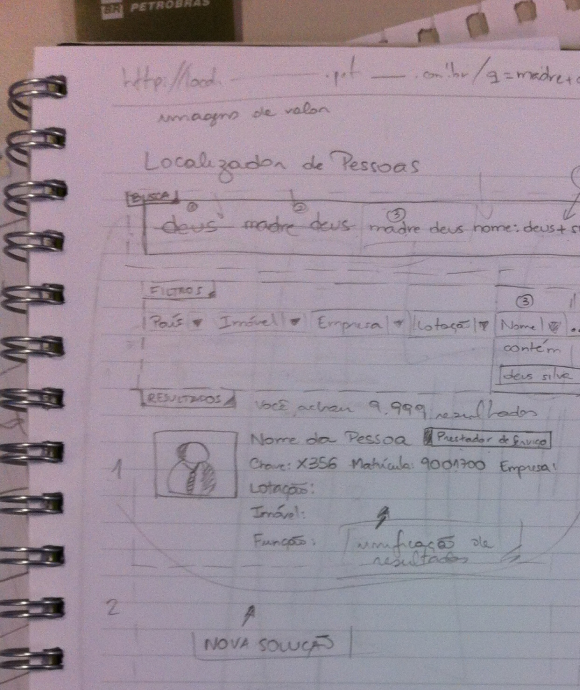
Prototypes
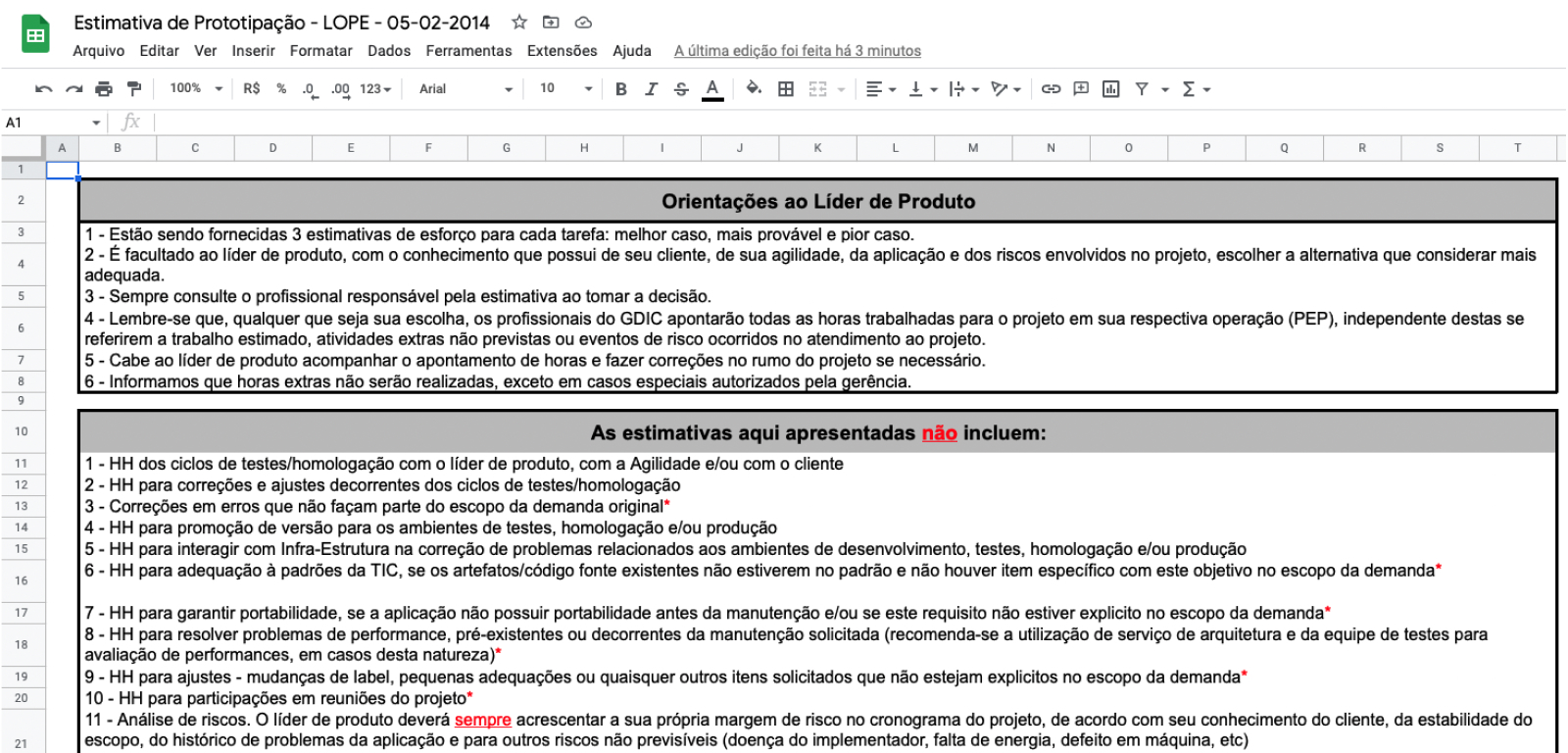
With the groups defined, the process of creating low-fidelity prototypes began, to validate hypotheses raised during the mapping and benchmarking process — so we could have a version 0 built from a known problem, and collect feedback on what could be done to improve it, until we had a stable 1.0 for launch, tested and validated by the groups.
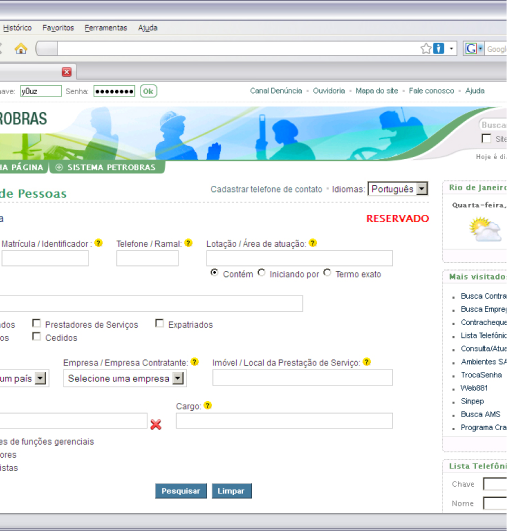
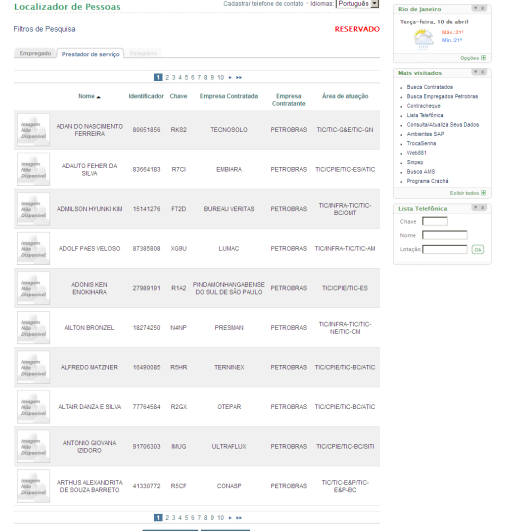
With the prototypes being refined, and the user experience improving along the way through graphic elements, typography and the use of colour (the UI package), it was possible to reach the first stable version of the project.
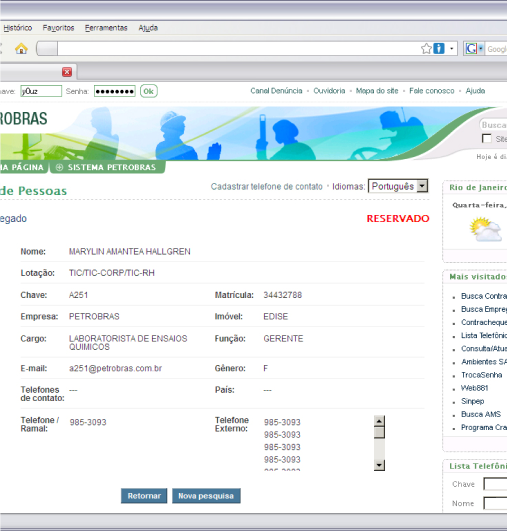
Lessons learned from LOPE 1.0
Right after the first tool was released to the general public, the feedback collected directly from the workforce set version 2 in motion, making drastic changes that had been detected during version 1. Because of this kind of implementation — at large scale, for all of Petrobras — every people-finding tool would be deactivated within 90 days. During that period, new studies and new interviews were carried out, new data was acquired, and the decision was made that LOPE 1.0 would serve as a fallback version, since users had already understood and grown used to the idea of having a single people-finding option from that moment on.
Besides that, a more effective solution had been detected during the version 1.0 process — but it was not adopted, for fear of being too innovative for the workforce. The more conservative solution, with multiple fields for each type of search, was adopted: not the most effective, but the least problematic for users during the adoption and use of LOPE. The more effective solution used a single search field and the possibility of running multiple searches by combining terms to bring back the results. And so LOPE 2.0 was born.
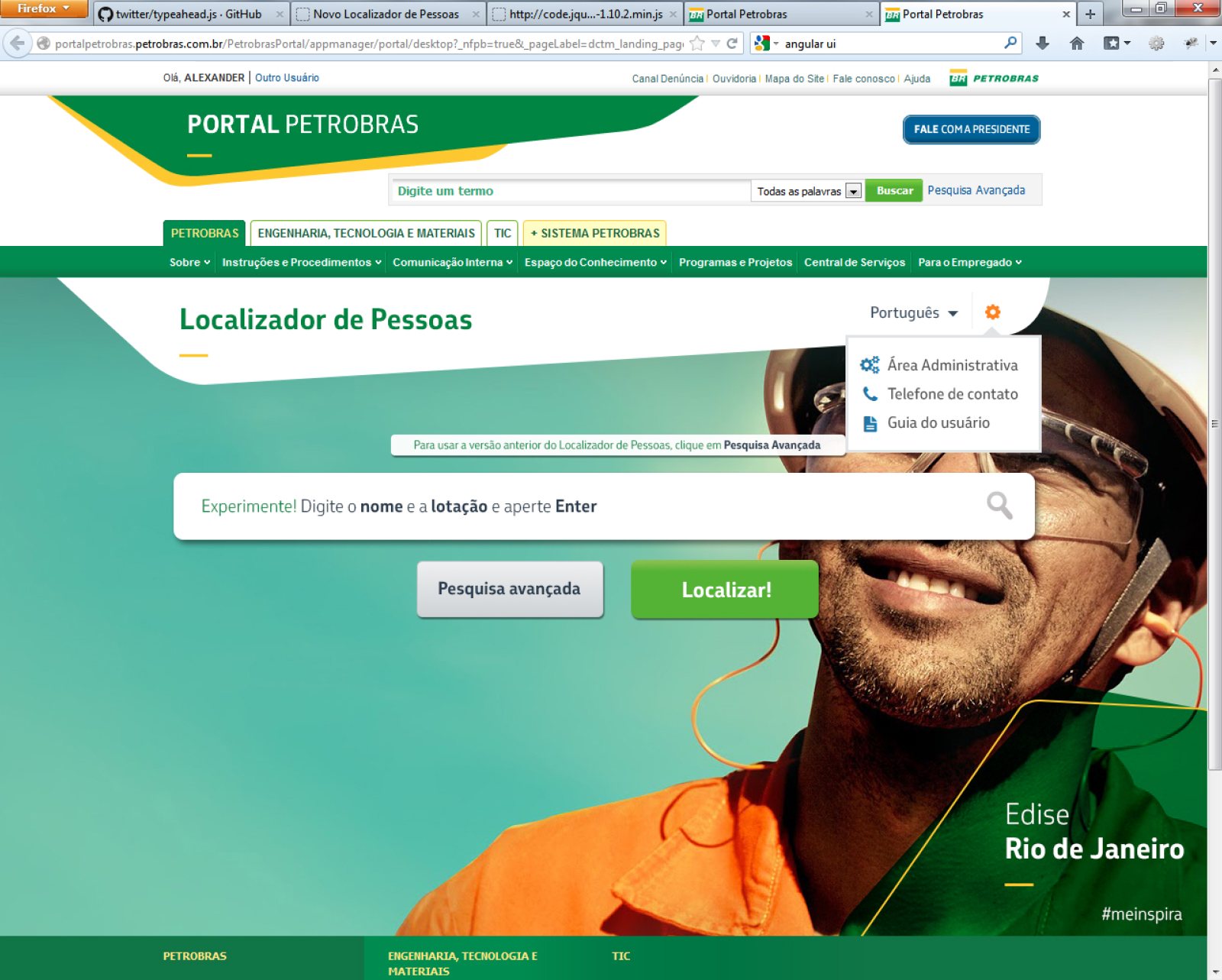
The new LOPE 2.0
With a performance-update package for the databases and the front-end technology, the arrival of Petrobras’s new corporate visual identity, and improvements to the company’s corporate design framework, the timing could not have been better to upgrade LOPE to version 2.0.
The new version of LOPE, according to feedback from the users in the Petrobras workforce, was more beautiful, simpler, easier, faster and more precise than the previous one. Initially conceived with the ability to show random images of Petrobras on each access to the tool — images of people, vessels and structures that were references to the company — this version was live for a short time. It was replaced by a neutral theme.
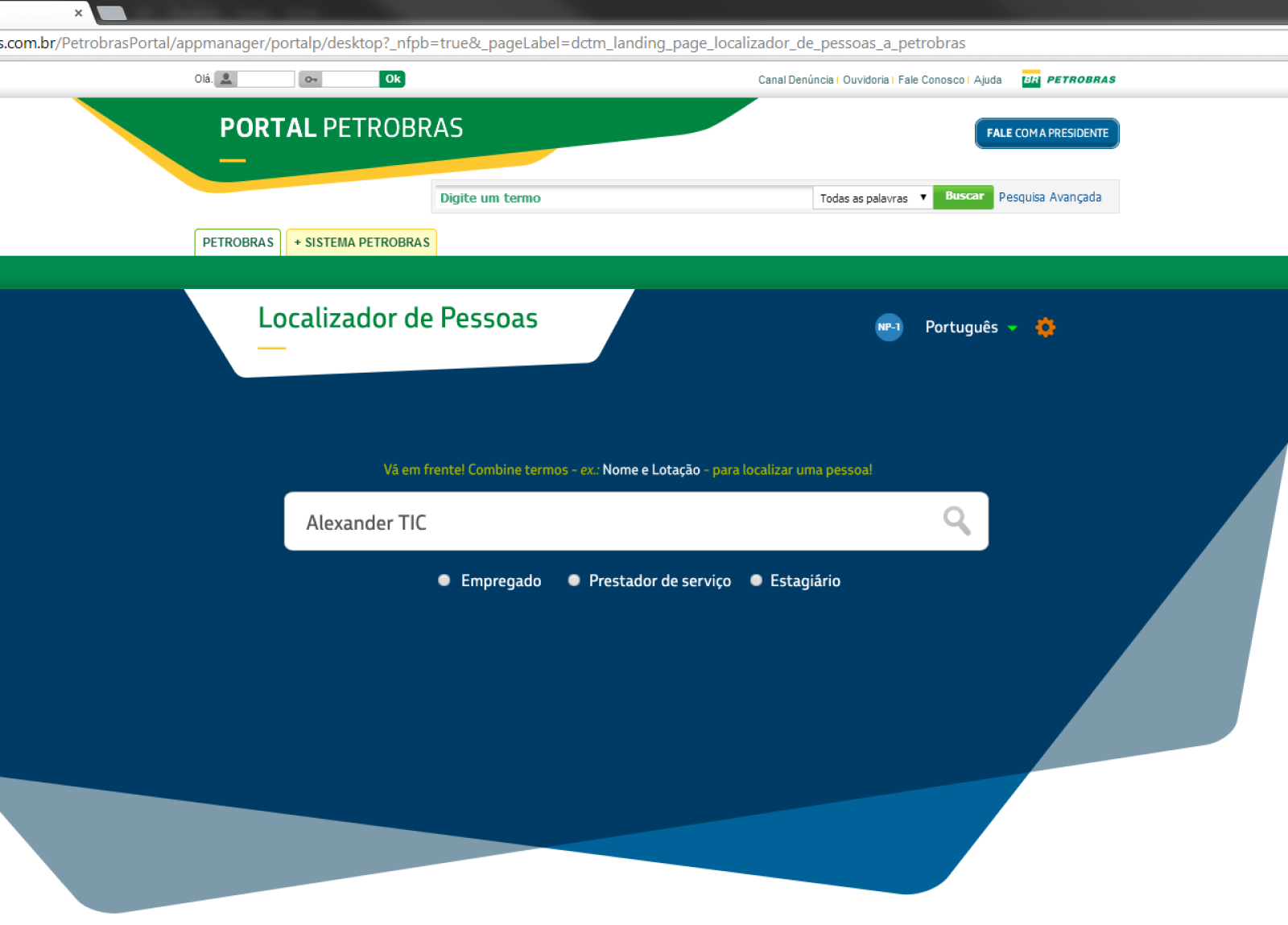
Home screen with an image vs. home screen with neutral graphics
The initial idea was to use relevant images through geolocation, and with that increase the relevance and the employees’ sense of belonging. Technical challenge accepted and duly solved, through the Geolocation API (HTML5) plus the cookies of the Petrobras intranet portal.
However, even with the technical challenge won, Petrobras HR could not find a way out of the human-factor dilemma: how do you determine that each department has its own relevant image? And further: if we flex the rule and let each employee upload their favourite image, what kind of image would end up being shown? That image could go against Petrobras’s norms and principles.
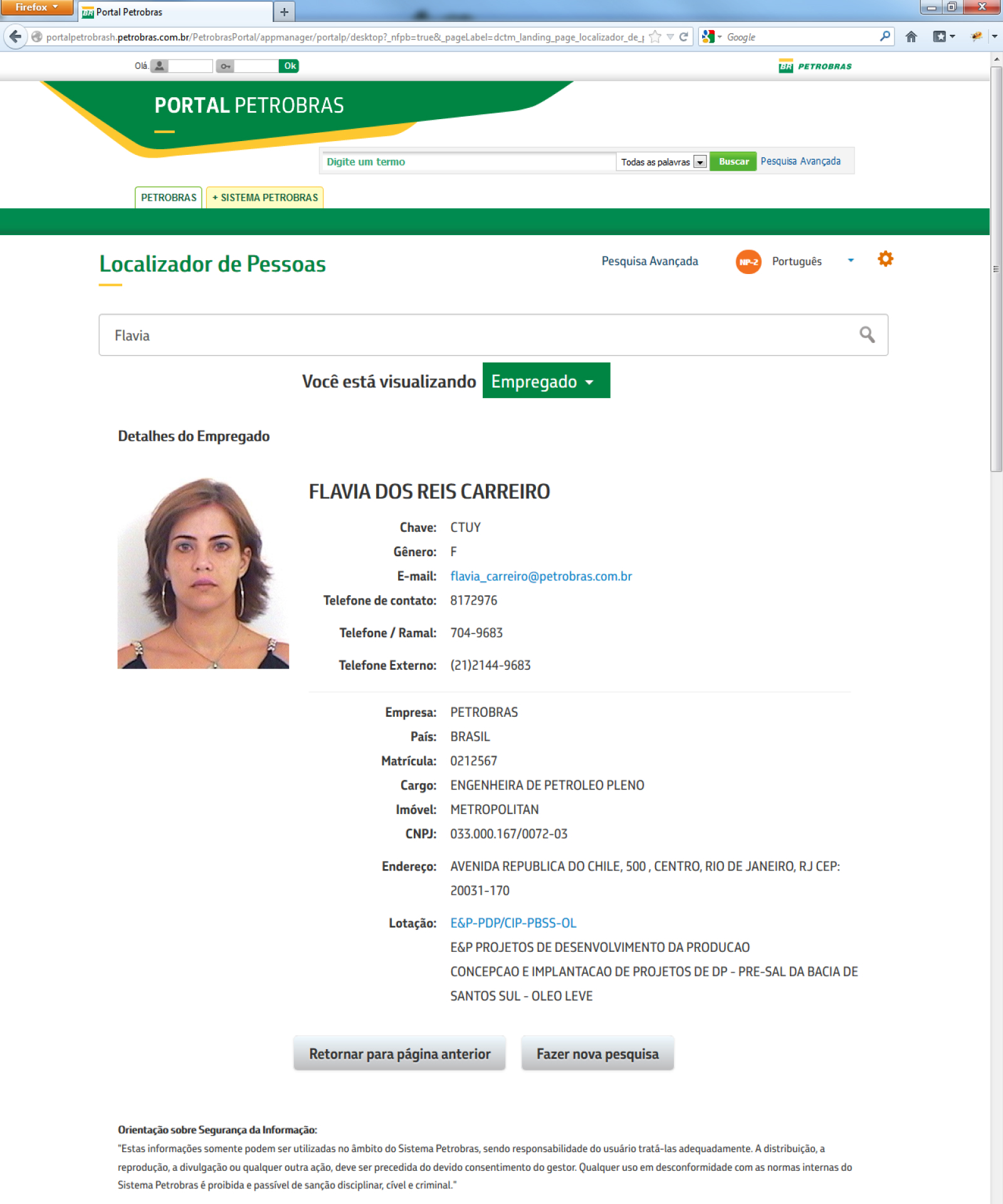
Search with up to 3 terms
With the new technology fully compatible with JAWS, the software used by fully visually impaired employees, the search system could locate any employee in the world using up to 3 terms. How? Think of it this way: if I meet you on the street and we are having a friendly conversation, the basic principle is that you know my name and the place where we are talking. To find me, it would be much simpler than you imagine: just type my name, Alexander, followed by Rio de Janeiro. The photo list would bring every person with Alexander in their name who works in Rio de Janeiro. From the visual record, you would locate the person.
And it did not stop there: a combination of up to 20 terms made a person locatable instantly — CPF, CNPJ, department, occupation, some fragment of the name — besides the direct identifiers that brought the result straight away. All of it available in a single field! That kind of decision meant we did not use autocomplete in the search field, because some combinations make that work unviable — CPF vs. phone numbers in Brazil and abroad, for example.
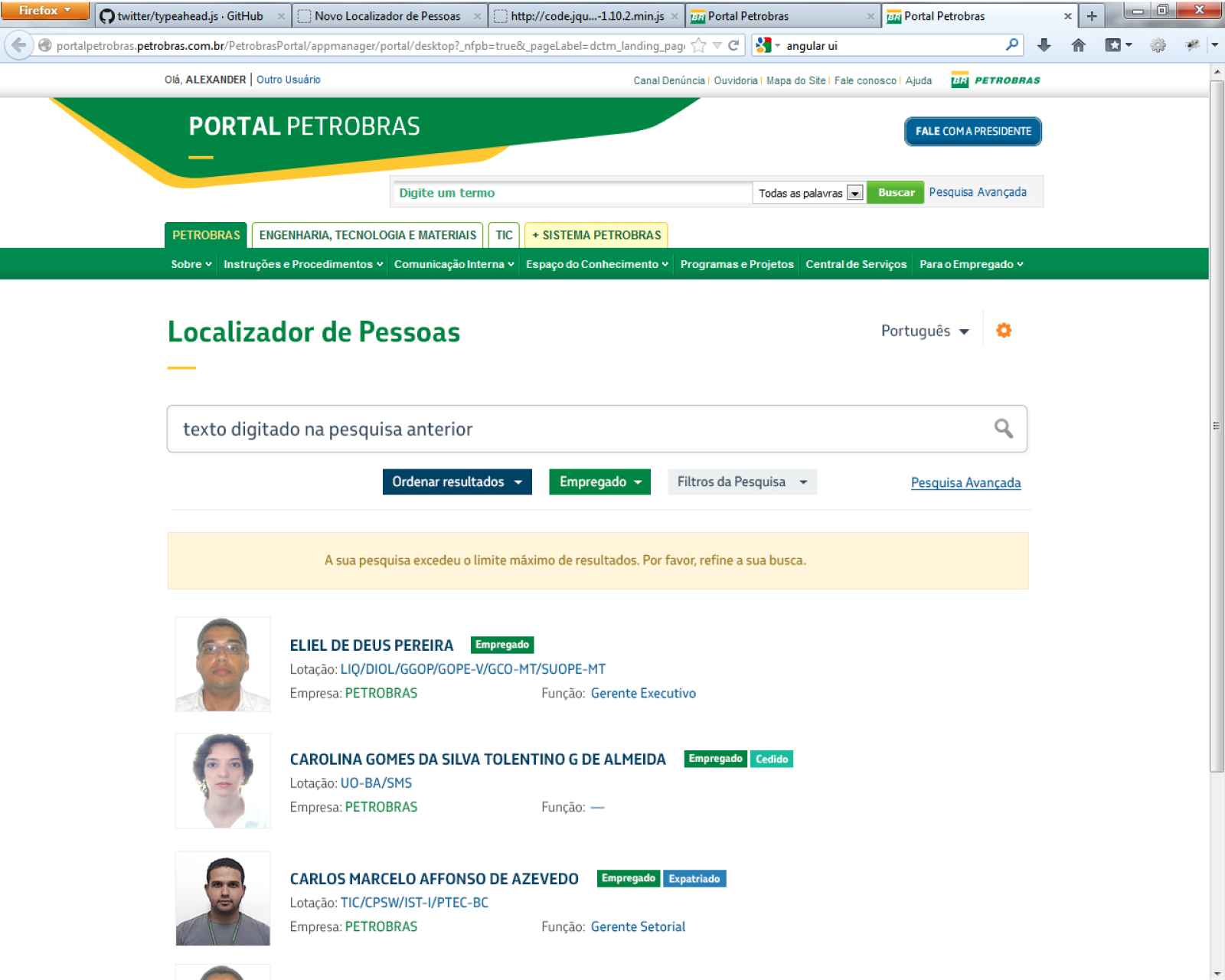
The gain was noticeable: the most critical profile, the Jirau Receptionist, could now clear the entry of a visitor or employee into the building after locating a person in up to 1min30s — practically ending the queues at critical periods, like the first business hour of the morning shift and the first business hour of the afternoon shift. Before, it took more than double that, about 4 minutes, with specific people-finding tools.
What were the results of this work?
After its definitive implementation, the People Finder (LOPE) achieved savings of about USD 5 million per year, across hardware and software licences, the distribution of maintenance teams over the tools scattered around the world, and transfers lost to delays releasing employees into the company’s buildings.
Besides that, with the unification of the people-finding systems, the time to enter Petrobras facilities was standardised and reduced to about 1min30s between the visitor or employee identifying themselves at the building’s reception and having their entry released by an employee who works on site. Much of it thanks to the new graphical interface — much lighter and much more effective — which lets a person be located using up to 3 terms in the search. Example of a search: “Marcelo Contratos Edise”. The application learns patterns and serves frequently accessed results faster and faster, thanks to BDFTP.
Finally, all the workforce data was normalised and inserted into a proprietary database framework called BDFTP (Petrobras Workforce Database), which uses state-of-the-art technology for storage, access control and performance, comfortably supporting data access and backup 24 hours a day, 7 days a week, every day of the year. This new technology is the single source of truth: whatever is searched there is the final and definitive version about an employee at the company. With that, all the objectives were met, after a long and dynamic project that lasted about 2 years.
About USD 5 million in annual savings between hardware and software licences, maintenance teams spread across the world, and transfers lost to delays releasing people into buildings. Entry time to Petrobras facilities standardised at about 1min30s. All workforce data normalised into BDFTP — the single source of truth.